

State Fish Hatcheries Support Recreation, Conservation, and a Connection to the Outdoors—and They Need Our Help
By Ashley Stimpson
Photos by Meghan Marchetti/DWR
Virginia anglers—I wanted to share an article with all of you about the fish hatchery systems that support opportunities throughout member jurisdictions of the Northeast Association of Fish and Wildlife Agencies, of which Virginia is a member. Virginia has nine fish hatcheries that stock trout, striped bass, walleye, smallmouth bass, and sunfish. Most of them require significant upgrades to keep producing fish and support sportfisheries—a story that is not unique—and this article details many of the challenges. DWR is actively pursuing funding mechanisms to maintain and upgrade the hatchery system, but without additional financial support, the ability of the system to support fish production will decline significantly. Note that our hatcheries are open to visitors, and we are happy to arrange a tour for interested anglers. Please reach out to us at fisheries@dwr.virginia.gov and we will set something up!
– DWR Chief of Aquatics Dr. Michael Bednarski
Every year, about 50,000 visitors arrive at the Salmon River Fish Hatchery in Altmar, New York. Some come to watch migrating salmon from the fish observation deck, others to admire fish in the hatchery’s aquariums. During the hatchery’s annual open house in September, visitors are invited into parts of the facility typically closed to the public, where culturists are busy caring for some of the 3.5 million fish they raise each year, while kids take lessons on how to catch those fish once they’re released into New York’s lakes, rivers, and ponds.
“It’s a really nice visitor experience,” brags Jim Daley, the superintendent of fish culture for the New York State Department of Environmental Conservation.
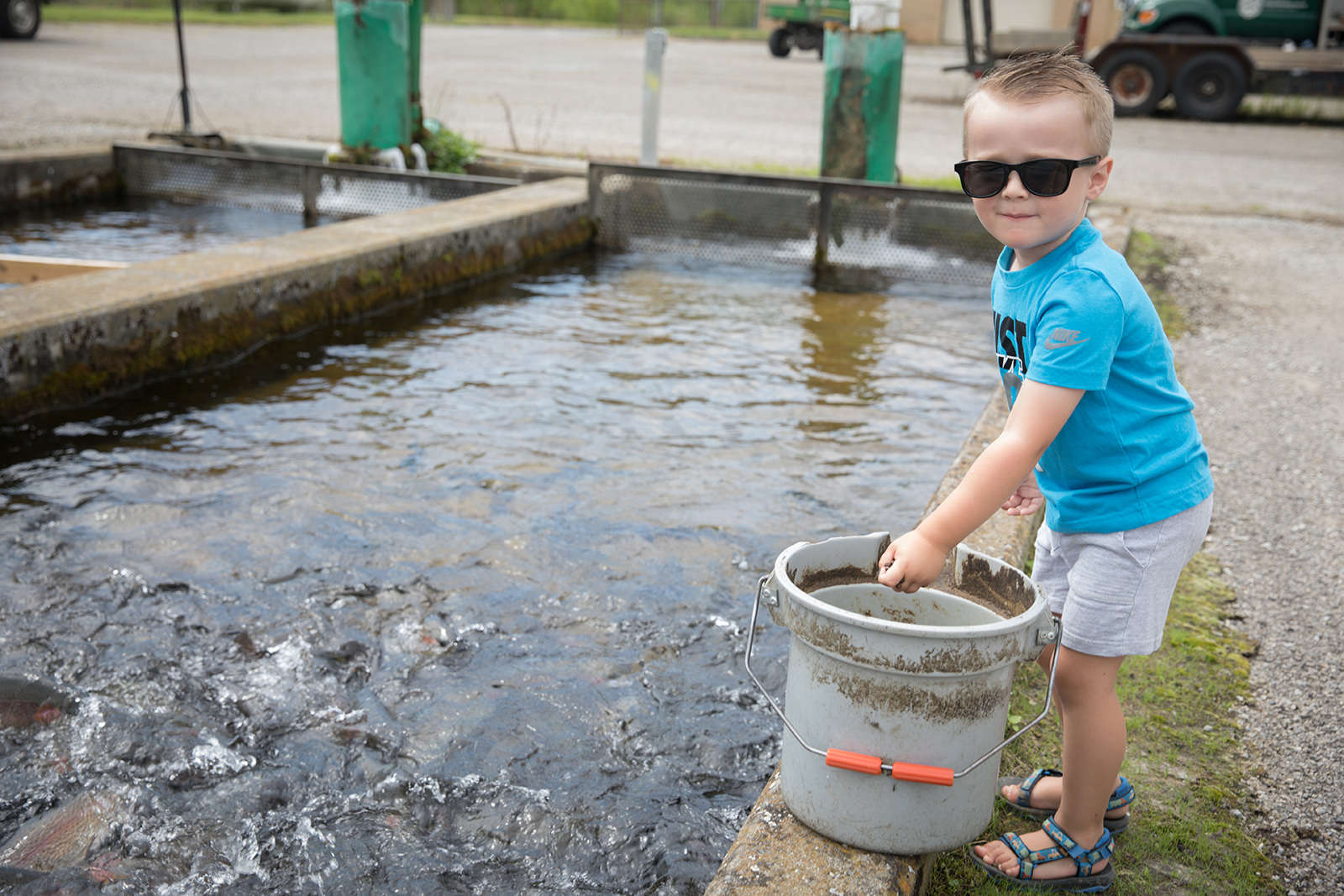
A young visitor feeds fish at a DWR hatchery.
But when Daley stops by one of the 12 state fish hatcheries he oversees, his experience is a little different. “I walk around, I see an endless to-do list,” he says.
Leaky ponds, crumbling concrete, faulty pipes and pumps: “there is a tremendous backlog of infrastructure needs,” according to Daley, “and every hatchery is in the same boat.”
Daley’s observations echo the findings of a recent report assembled by the Northeast Fisheries Administrators Association (NEFAA), which assessed the condition of 95 fish hatcheries in the Northeast United States, including 10 overseen by the federal government. It found that more than half of the facilities were in “fair” or “poor” condition, some “approaching the point of irreversible repair.”
There’s a lot more than fish at stake.
Not only does the sale of fishing licenses and equipment provide “an umbrella of funding for law enforcement, rare species conservation, habitat protections, and education programs,” says Shawn Crouse, chief of freshwater fisheries for the State of New Jersey, “getting outside can open people’s eyes to caring about nature.”
While there have been some recent funding victories, hatchery staff around the region are speaking out about the dire need for investment in state fish hatchery systems—not just for their day-to-day operations, but the future of American conservation.
A Legacy of Conservation
The first state fish hatchery was established in Caledonia, New York, in 1864. That was seven years before congress authorized the National Fish Hatchery System in 1871 in an effort to buoy commercial fisheries and feed more Americans. By the early 20th century, hatcheries were springing up all over the country with a broadened mission: to restore ecosystems that had been altered by development and pollution and restock waters that had been grievously overfished.
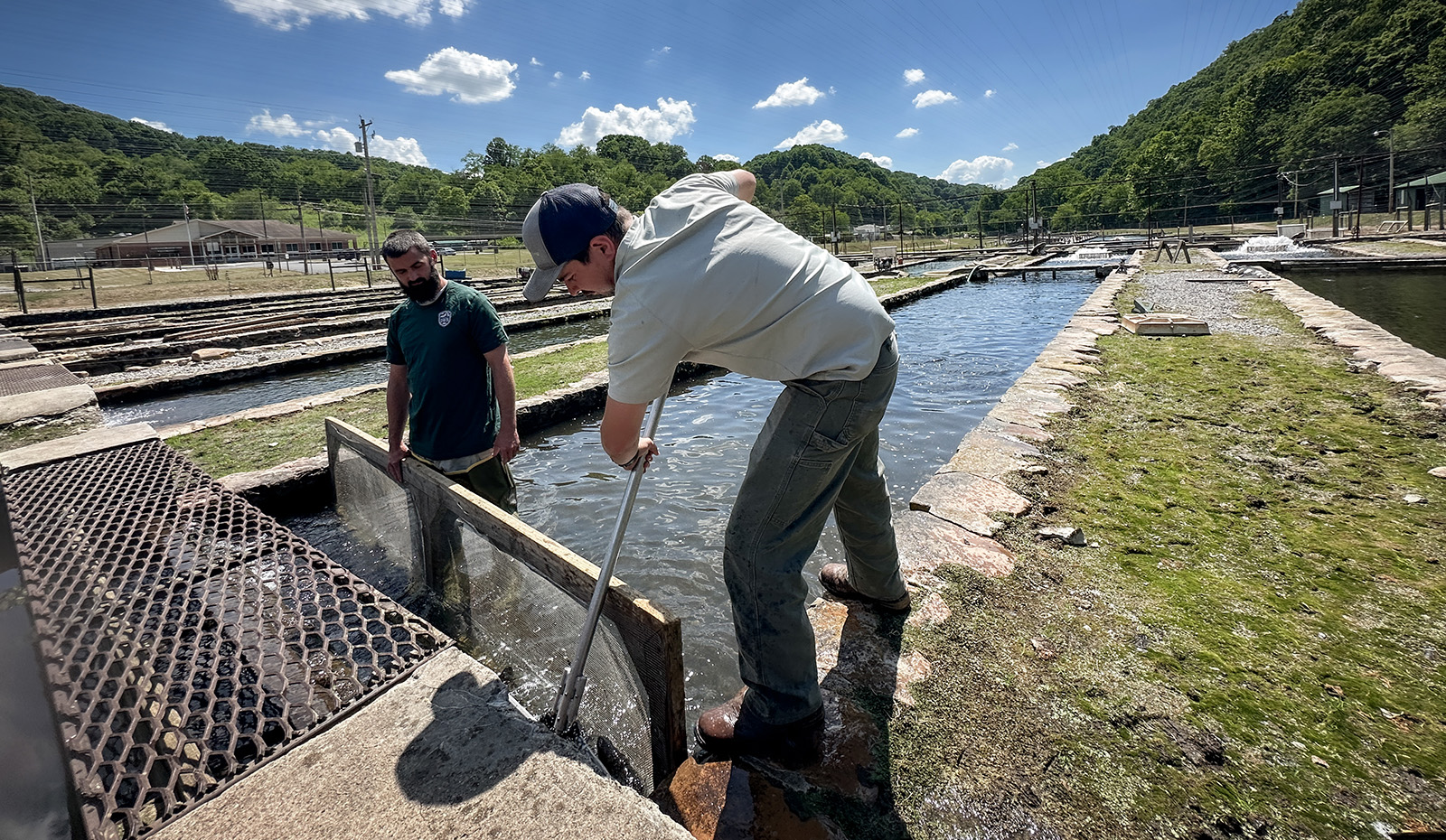
A century later, state hatchery systems have taken on an even greater range of roles, providing education and outreach, conducting research to support the health of aquatic ecosystems in the face of climate change, and stocking world-class destination fisheries. Since most of the funding for conservation in this country comes from the sale of hunting and fishing licenses, as well as a federal excise tax on fishing equipment and motorboat fuel, growing fish that anglers want to catch is paramount to forwarding that multi-faceted mission.
Hatcheries also bolster local economies. The sportfishing industry provides a significant economic boost to communities in the form of nights spent at hotels, pre-dawn breakfasts before a day on the water, and cold drinks after. In New Hampshire, 200,000 anglers contribute about $150 million to the state’s coffers each year. In Pennsylvania, sportfishing supports 14,000 jobs and generates $53 million in annual revenue for the state’s general fund.
In New York, where 20 million angler days generate 2.1 billion dollars in economic activity, fisheries chief Steve Hurst notes that it’s not just dollars that count. “Hatcheries put a lot of smiles on a lot of faces,” Hurst says.
Old Buildings, New Challenges
The average age of the government fish hatchery in the Northeast is 80 years old. “These hatcheries were created when labor was cheap and materials were cheap,” says Hurst, “but the world has changed.”
According to New Hampshire Inland Fisheries Chief Dianne Timmins, one of the biggest changes has been the price of doing business. “In the last three years, my costs have tripled,” she says. “We went from $200 thousand in feed to half a million. Water testing has increased from $23 thousand to $64 thousand.”
Timmins oversees six hatcheries; four of them are more than 100 years old and in poor condition, and all of them, according to the NEFAA report, “are on borrowed time and at risk of major catastrophic failure.”
“We try to fix things as they break, but because of the magnitude of what it costs to fix these things, we’re limited,” Timmins said.
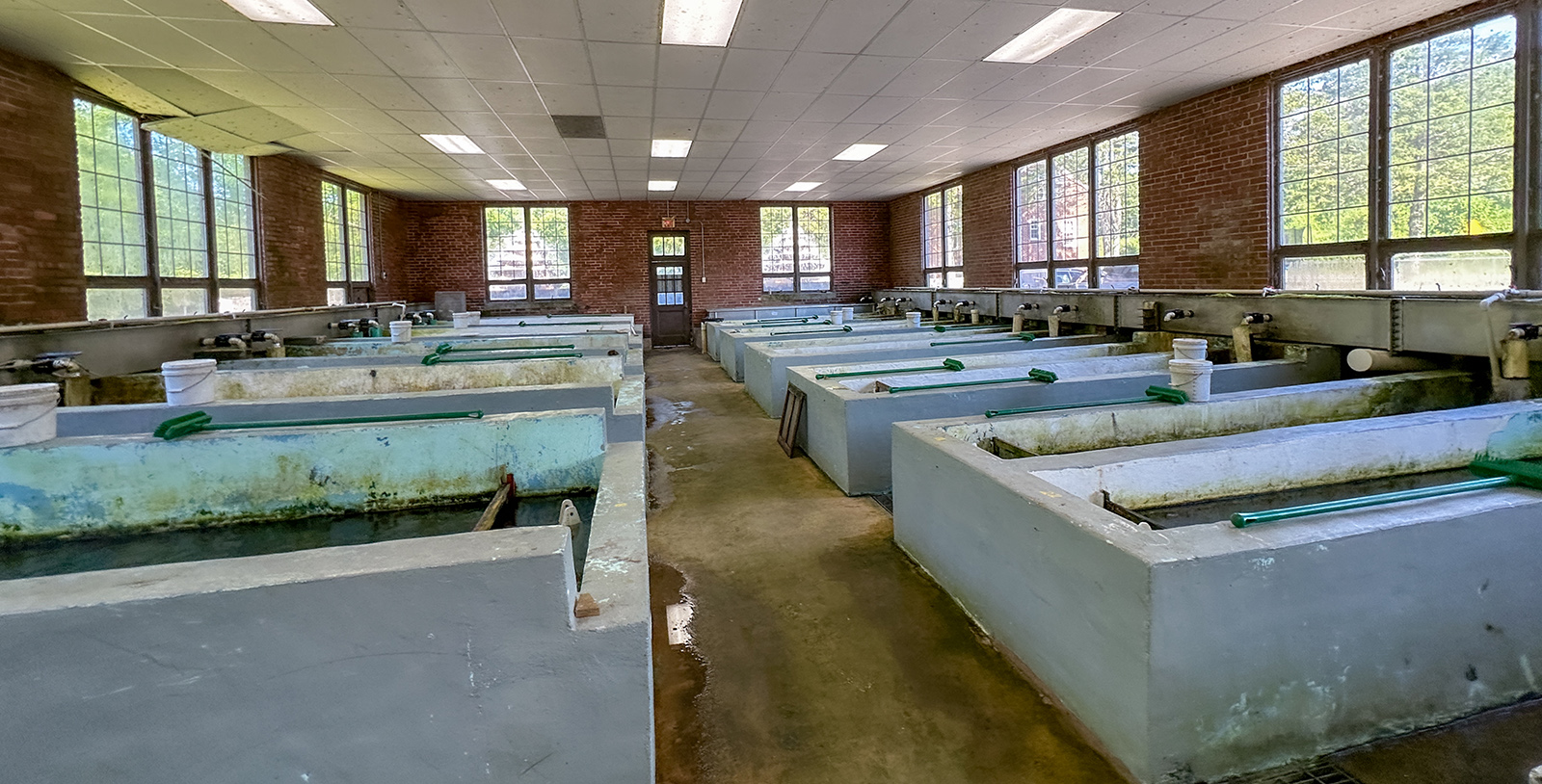
Government fish hatcheries face the challenges of aging infrastructure and increasing maintenance costs.
Craig Lemon, superintendent of the Hackettstown Fish Hatchery in New Jersey, says cost isn’t the only challenge when it comes to updating ancient infrastructure. “Every time we go for parts, everything is obsolete. It’s a struggle.”
Where funding and equipment are in short supply, employees must fill in the gaps. “Hatchery staff are some of the most out-of-the box thinkers and problem solvers,” says Hurst. “They can fix just about anything and always come up with innovative ways to get the job done.”
“There’s almost nobody that works harder than a hatchery employee,” Lemon echoes.
But not even determined staff can MacGyver a way to meet modern environmental standards that many hatcheries are failing to meet. “There were no water quality rules when these things were created,” says Timmins. “No one had thought of the Clean Water Act. No one had thought of the impacts these hatcheries might have.”
Additionally, these older facilities often rely on dated heating and cooling systems, which lack the energy-efficient standards of today’s technology. Groundwater pumps suck up a significant amount of electricity. “We have not kept pace with the environmental movement in this country,” says Hurst. “We need to reduce our carbon footprint.”
Bright Spots
There are signs that state agency leaders are beginning to notice hatcheries’ urgent need for funding.
The State of New York, for example, just approved a bond act that promises up to $75 million for the hatcheries. “We need more to get our system modernized, but we haven’t had that kind of money in the past, and it’s a great start,” says Hurst.
In Maine, the state’s 2022 Jobs and Recovery Plan set aside $20 million for the state’s hatcheries, while in New Hampshire, the American Rescue Plan Act has awarded the state $55 million to modernize one of its six facilities. The original hope was these funds would repair two but increased costs prohibited that.
Timmins says the sum won’t fix all of the hatcheries in New Hampshire, but that it’s a much appreciated start. Meanwhile, fishing in her state has exploded in popularity since the pandemic encouraged more people to get outdoors than ever before. In 2022, 150,000 anglers spent 3.5M days fishing in New Hampshire equating to $1.4B to the economy (NORC).
For hatchery staff around the region, making sure the increasing number of anglers on the water have something to catch is the reason they got into aquaculture in the first place—and the reason they stay, despite the challenges of their jobs.
“We provide 365 days of fishing for $33 in New Jersey,” says Lemon. “You can’t take your kids to McDonalds for 30 bucks.”

Government fish hatcheries provide recreational fishing opportunities for many.
Crouse adds that in New Jersey, a densely populated state, hatchery-stocked waters are essential to making sure everyone has the chance to cast a line.
“We’re a very urbanized state, and so much of what we do overcomes those environmental obstacles of degraded habitat,” he says. “That gives people in an urban environment a chance to enjoy the outdoors.”
In New York, Hurst says fish hatcheries benefit communities that need them most, from rural economies that thrive on tourism to disadvantaged groups that may only have access to one small pond or stream.
The real value of these facilities, according to Hurst, isn’t just in the recreation opportunity they provide or the economic boost they offer; it’s in the attitudes they foster.
“The end result of the work hatcheries is to get people outside, enjoying an environment and pastime they might not otherwise be able to enjoy.” Hurst says. “That’s important because a majority of people in this country have lost their connection to nature—and you can’t have conservation without advocacy for the resource.”
Most state and federal fish hatcheries allow for visitors and staff welcome the opportunity to educate the public about what they do and why they do it. Visit a hatchery soon to learn how fish are raised and discover the important role they play in conservation. You’ll have a better appreciation of the need to keep them running strong so we can ensure our fisheries resources continue providing restoration and recreational into the future.
Legal Disclaimer:
EIN Presswire provides this news content "as is" without warranty of any kind. We do not accept any responsibility or liability for the accuracy, content, images, videos, licenses, completeness, legality, or reliability of the information contained in this article. If you have any complaints or copyright issues related to this article, kindly contact the author above.
