

Bringing you the latest news on agriculture
Provided by AGP
Explore the Tidal James Wild
By Alex McCrickard/DWR
When people think about the James River, they often envision a large, boulder-strewn, East Coast river making its way from the Blue Ridge mountains all the way to the Chesapeake Bay. The Upper James provides gorgeous scenery, excellent paddling for novice and experts alike, and wonderful fishing for species like smallmouth bass and muskellunge, among others. But that James River ends in Richmond, which is a prime example of a fall line city. It’s the highest point that tides can rise and fall from the Chesapeake Bay and Atlantic Ocean and the site proved to be the ideal settling point for colonial settlers as boats couldn’t navigate further upriver. It’s the spot where the tidal James River, a very different river, begins.
In Richmond, the James transitions from the Piedmont to the Coastal Plains—the rocky rapids and riffles are replaced by tidal fluctuations and flat water. The tidal James has its own unique beauty and personality, but its sheer size and volume can be intimidating to anglers who aren’t used to big tidal waters. Breaking down the river by sections can be extremely useful when approaching big water. There are lots of access points to the tidal James from Richmond to its confluence with the Chesapeake Bay—here are just some of our favorites:
Ancarrows Landing
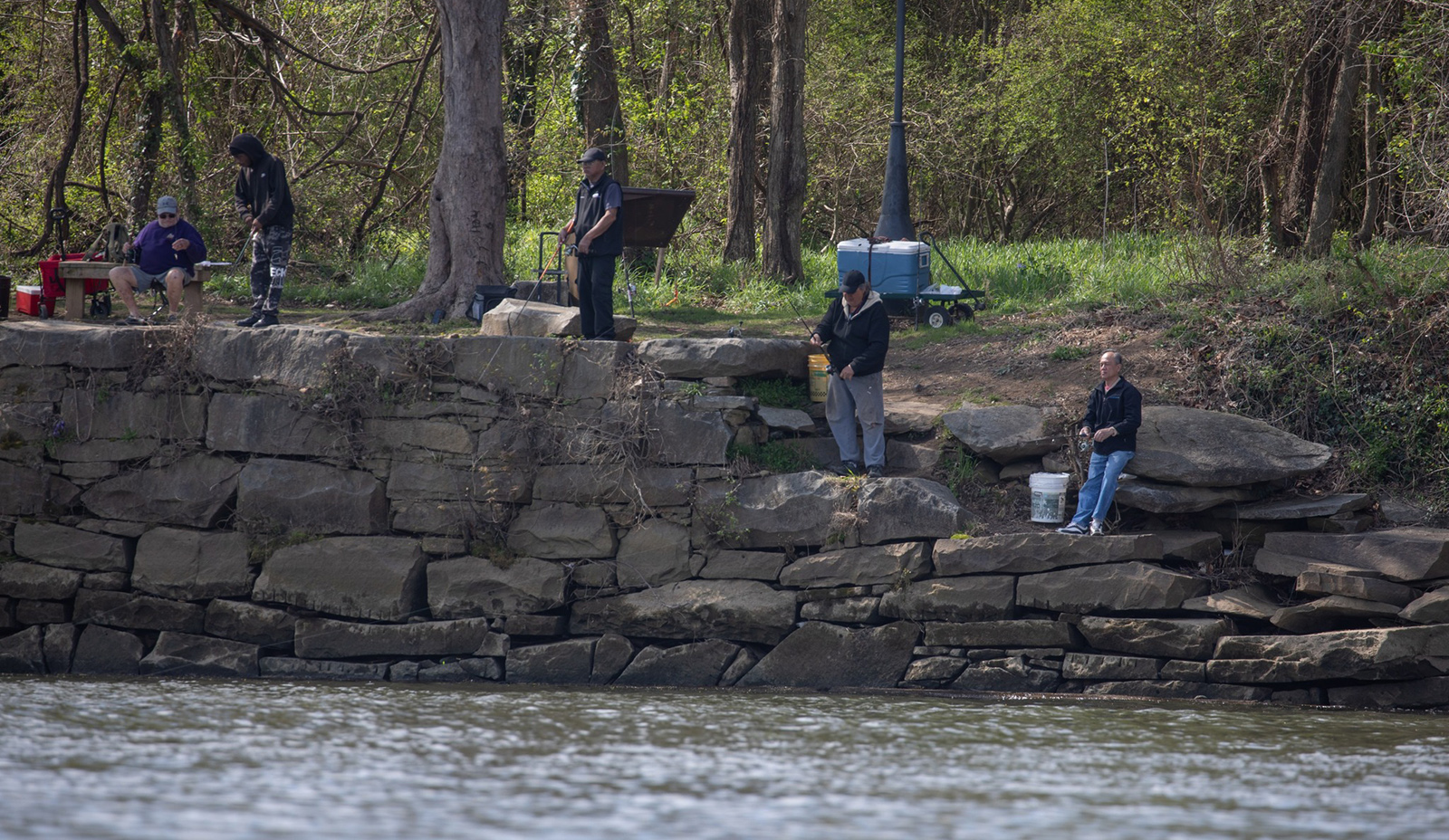
Anglers fishing from the bank at Ancarrows Landing in Richmond. Meghan Marchetti/DWR Photo
Ancarrows Landing is well known by anglers who fish the river in downtown Richmond. This boat landing, owned and managed by the city of Richmond, very likely sees more use between the second half of March and the first half of April than during the entire remainder of the year due to the popular shad run on the James! Everyone is ready to get their boats out after a long winter and the boat ramp has two lanes and plenty of space. You will see everything from canoes and kayaks to jon boats, skiffs, and 20-plus-foot center consoles suited for the Chesapeake Bay.
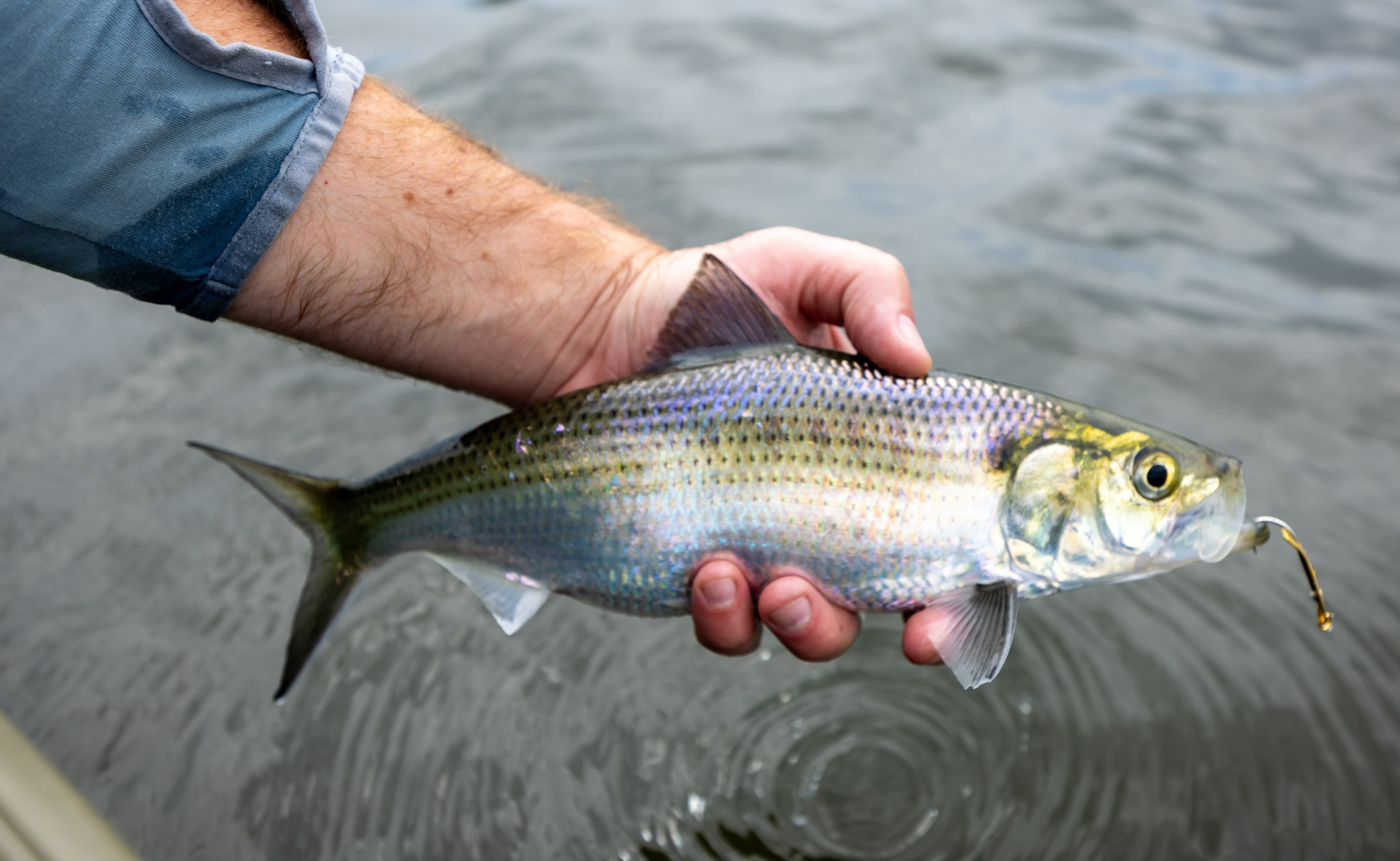
A hickory shad caught int he waters off Ancarrows Landing. Meghan Marchetti/DWR Photo
In addition to hickory shad and American shad, anglers target striped bass and white perch here in the springtime as well. Both shad and striped bass are seasonal visitors to this section of the James as they complete their spawning runs. Smallmouth bass, largemouth bass, blue catfish, and flathead catfish are also highly sought after. Bank fishing is popular here as well, especially during the shad run!
Osborne Landing
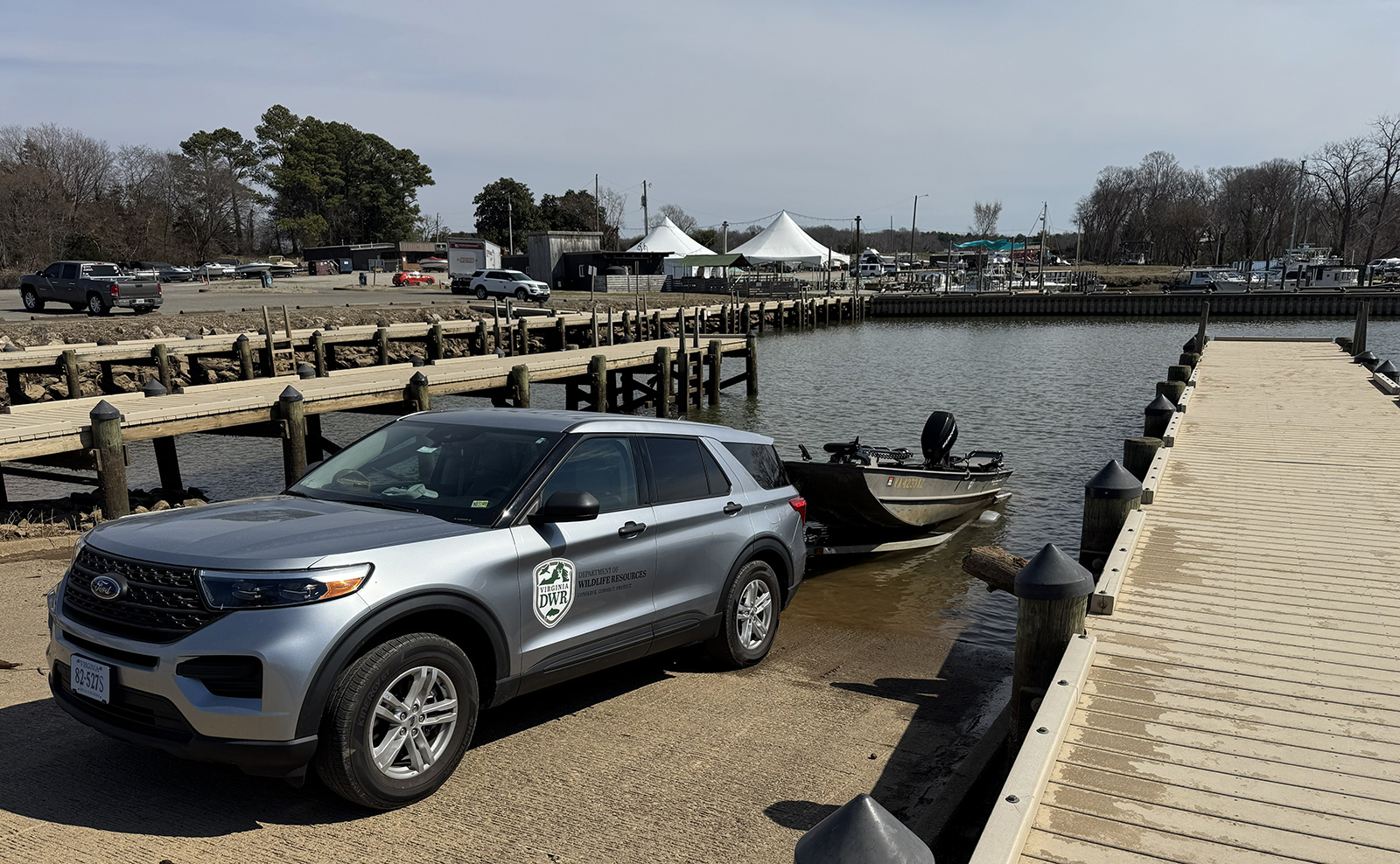
Putting in at Osborne Boat Landing.
The next public access downriver from Richmond is Osborne Landing, with three double boat ramps in addition to a kayak/canoe launch. Osborne is a very popular boat ramp and has been the host of many national bass fishing tournaments. You guessed it, largemouth bass are the primary target for anglers launching from Osborne and the James is a world-renowned tidal largemouth bass fishery. With that said, many anglers also use Osborne as a launching point to target blue catfish. There is a fishing pier at Osborne, so you don’t have to have a boat to explore this section of the river. Spring offers anglers opportunities to catch hickory shad, white perch, and striped bass in addition to species like blue catfish, flathead catfish, largemouth bass, yellow perch, and bowfin.
Deep Bottom Boat Landing
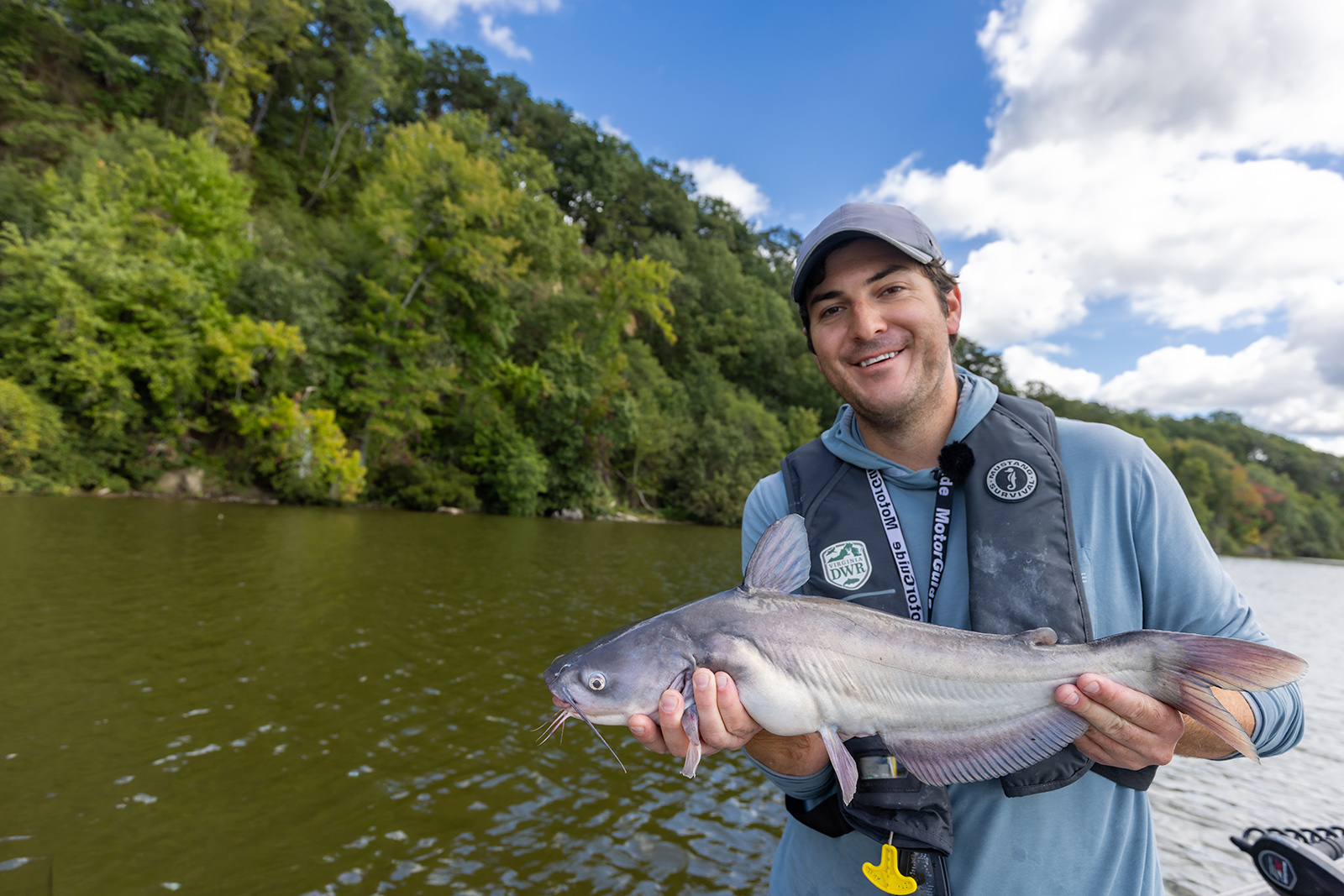
A typical blue catfish from the tidal James. Meghan Marchetti/DWR Photo
Deep Bottom Boat Landing gives anglers a good launching point to explore Presquile National Wildlife Refuge, which is just downstream. The James takes on its sinuous character here as it bends and oxbows towards Hopewell. Long turns, flats, and freshwater marshes make up much of the river’s features. Blue catfish and largemouth bass are the primary target for anglers fishing Deep Bottom. Trophy blue catfish exceeding the 50-pound mark are regularly caught in this section of the river. Bald eagles, ospreys, and blue herons are common sights when visiting this section of the river.
Appomattox Delta & Confluence
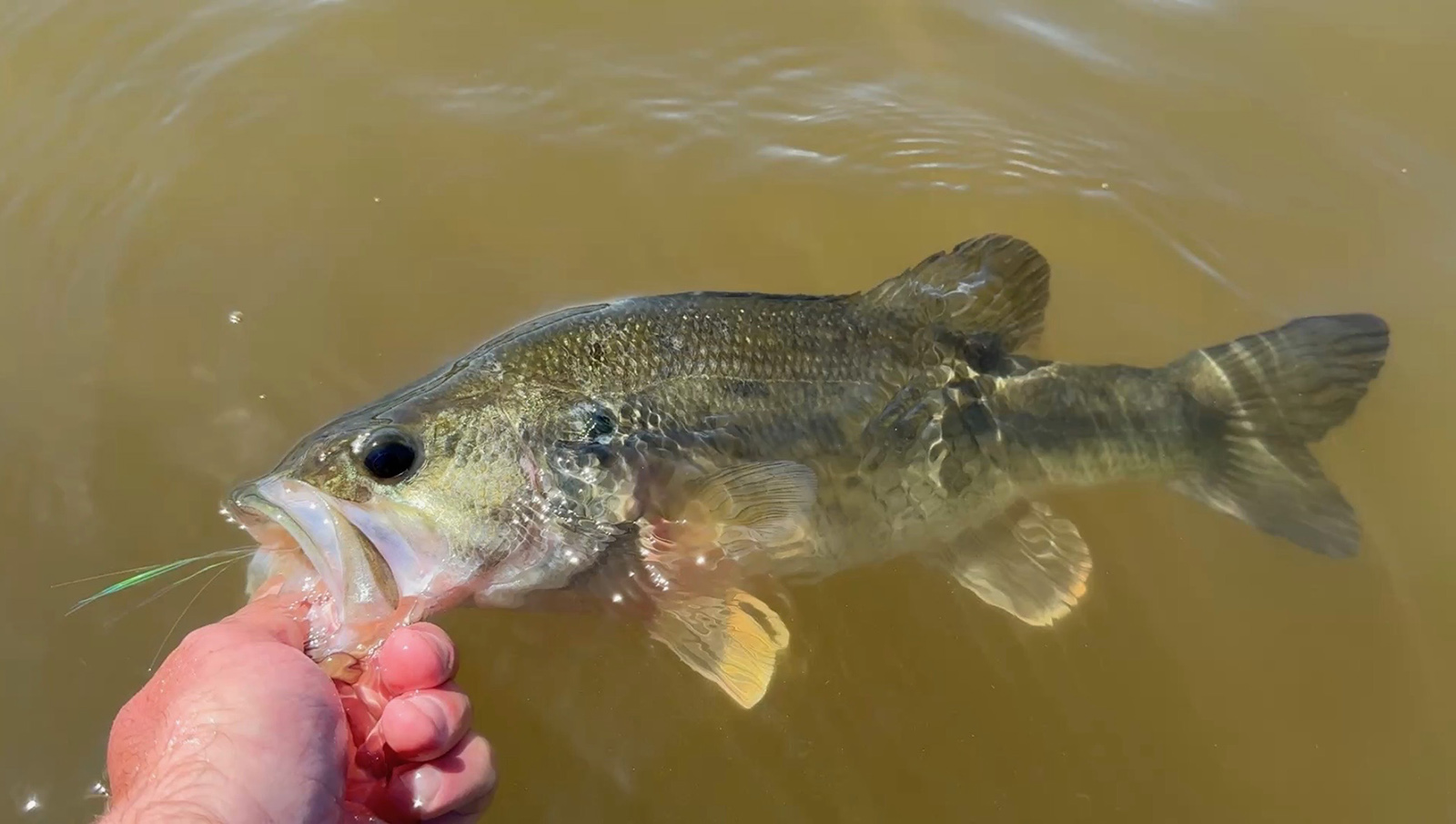
A typical largemouth bass from the Hopewell area of the tidal James. Photo by Alex McCrickard/DWR
Hopewell City Marina provides access to the Appomattox River just upstream of its confluence with the James, while Jordan Point Marina provides main river access just below the confluence. The geomorphology of the James changes drastically here as the Appomattox contributes a major source of freshwater to the river. The river widens greatly and water residency time increases dramatically as compared to the narrower channels upriver. Wide flats hold water throughout the tides in this section of the river. Blue catfish are ubiquitous in this section of the river and a few specimens exceeding 100 pounds are caught nearly every year. Largemouth bass fishing is extremely popular in this reach and there is a wealth of habitat to explore from rip rap points to docks, duck blinds, wooded shorelines, drops offs, humps, and turns. In the springtime, many anglers troll artificials or fish live and cut bait for striped bass.
Lawrence Lewis Jr. Park & Chickahominy Riverfront Park
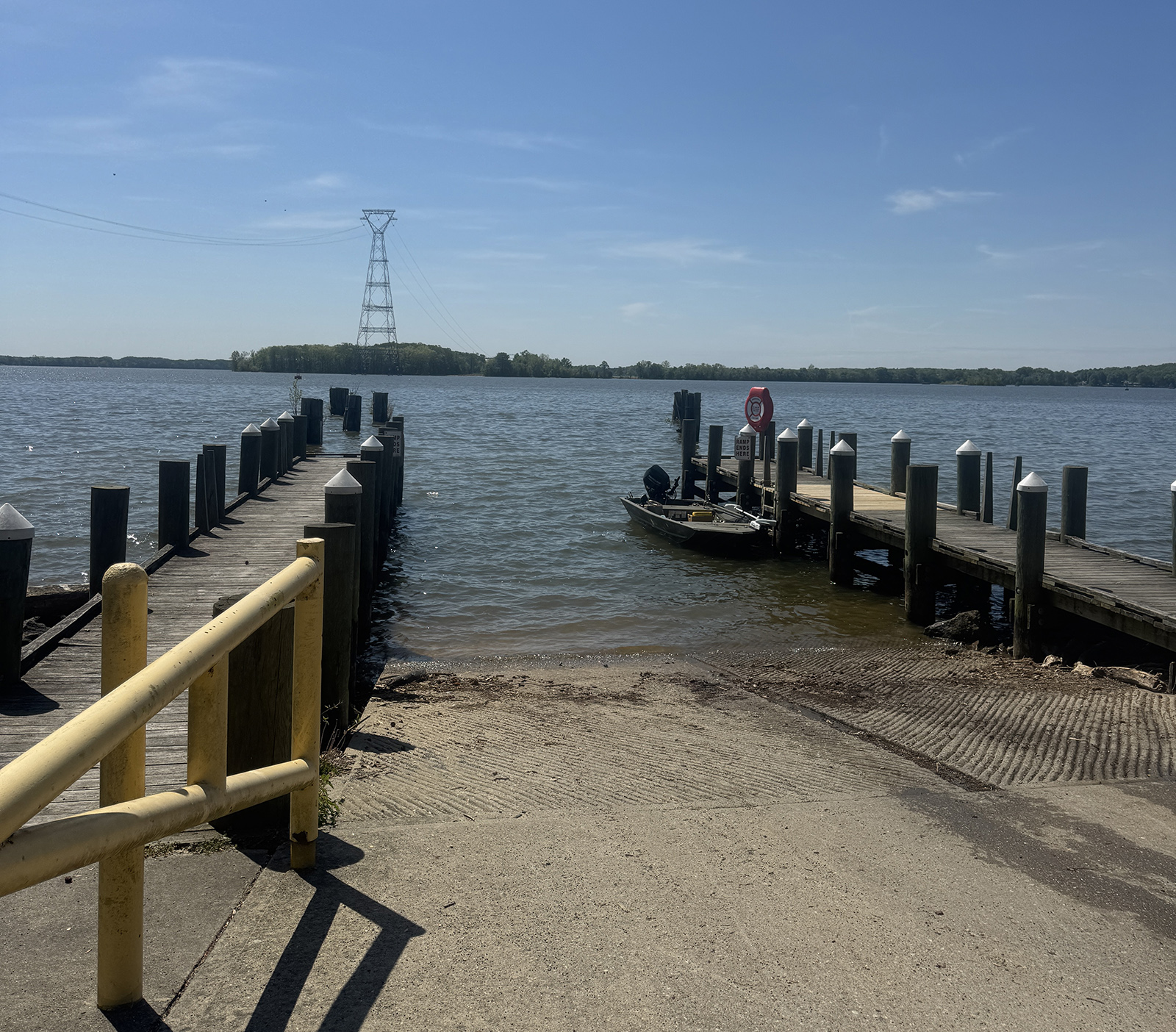
The boat ramp at Lawrence Lewis Jr. Park. Photo by Alex McCrickard/DWR
Lawrence Lewis Jr. Park provides anglers with a single-lane boat ramp to access the river in Charles City County. The park also has a fishing pier for the shorebound angler. The pier is a popular spot to target blue catfish specifically. Flats, points, and river bends are plentiful in this section. Additionally, multiple large creeks enter the James both upstream and downstream of this access point. These confluences create excellent habitat to target everything from catfish to largemouth bass.
Chickahominy Riverfront Park, located in James City County, is roughly 17 miles downriver from Lawrence Lewis Jr. Park. Chickahominy Riverfront Park has a wide two-lane boat ramp that puts anglers in the water at Gordon Creek just above its confluence with the Chickahominy River. Just downriver from the park, the Chickahominy flows into the James. Bald cypress trees and expansive freshwater marshes make this section of the river particularly scenic. This access site is extremely popular among largemouth bass enthusiasts and is a local site for multiple tournaments every year. Both the Chickahominy and the James provide excellent fishing for largemouth bass in close proximity to the park. The riverfront park also has a large fishing pier. Many anglers reserve campsites along the river at the park and stay for multiple days when exploring this section of the James.
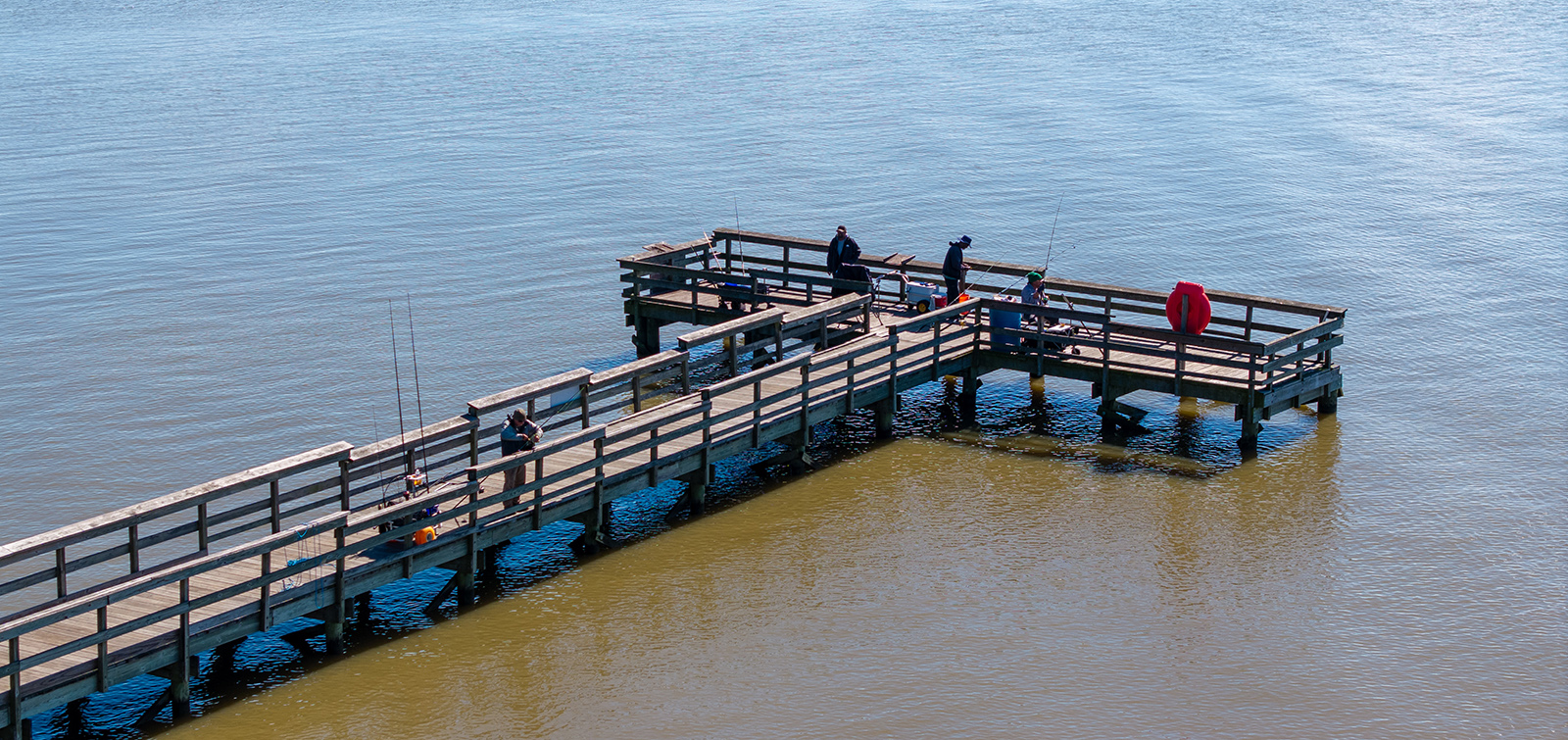
The fishing pier at Chickahominy Riverfront Park. Photo by Deane Flickinger/DWR
Hog Island Wildlife Management Area
Hog Island marks the freshwater/saltwater license line on the James. Specifically, it’s a line connecting Hog Point on Hog Island (Surry County) and the downstream point of the mouth of College Creek (James City County). Anglers fishing upstream of this line are required to have a valid freshwater fishing license while anglers fishing downstream of this line are required to have a valid saltwater fishing license. The river’s salinity levels increase greatly in this area, but they vary seasonally and annually depending on flow and rainfall.
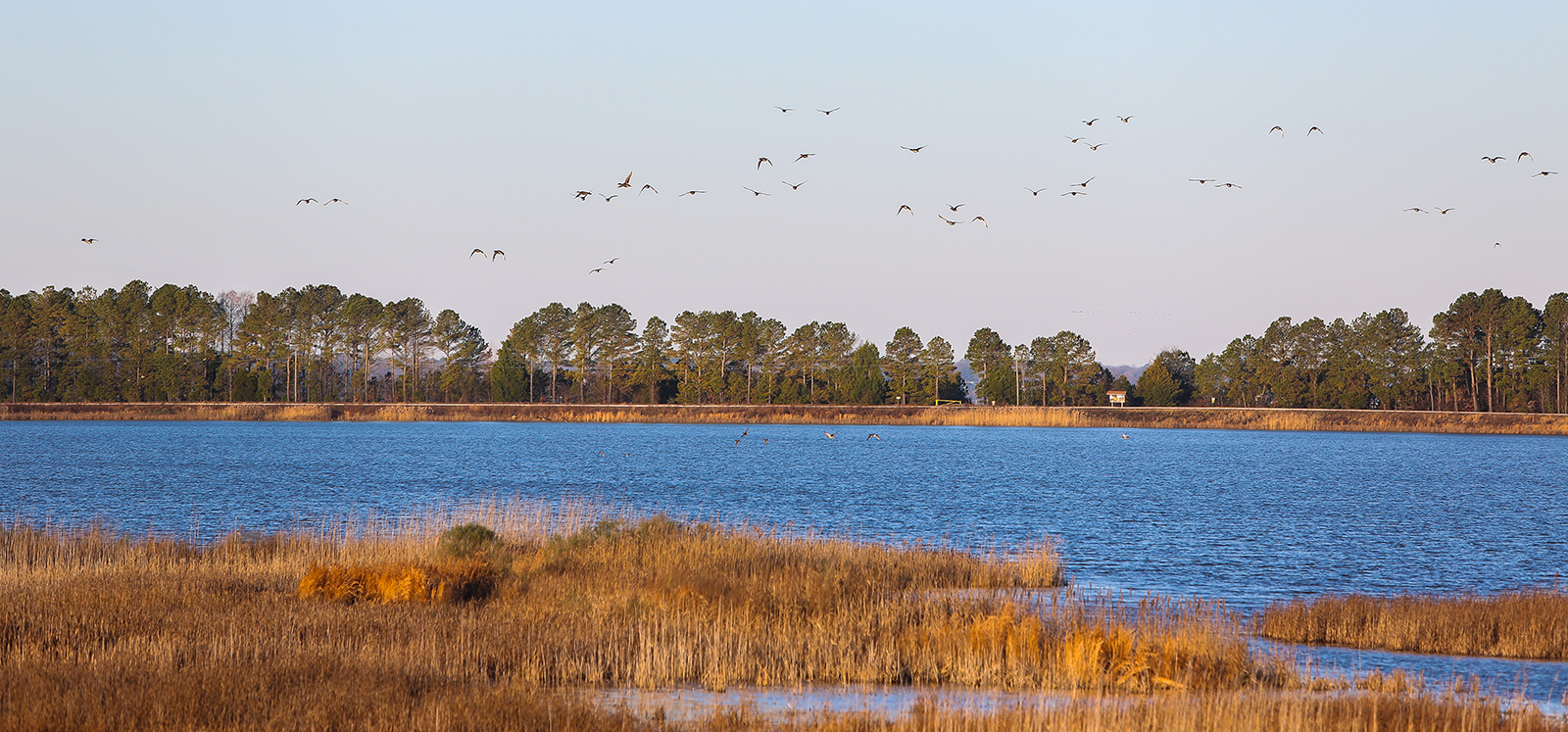
Hog Island WMA. Meghan Marchetti/DWR Photo
Lawnes Creek Boat Ramp gives anglers access to Lawnes Creek just upstream of its confluence with the James. Striped bass, red drum, and speckled trout are the primary fish anglers target in this reach of the James. Fishing for blue catfish can be quite good as well, particularly during wet winters and wet springs as the salinity wedge pushes further downriver. Black drum and flounder are also caught by anglers in this area.
Ragged Island Wildlife Management Area and the Mouth of the James
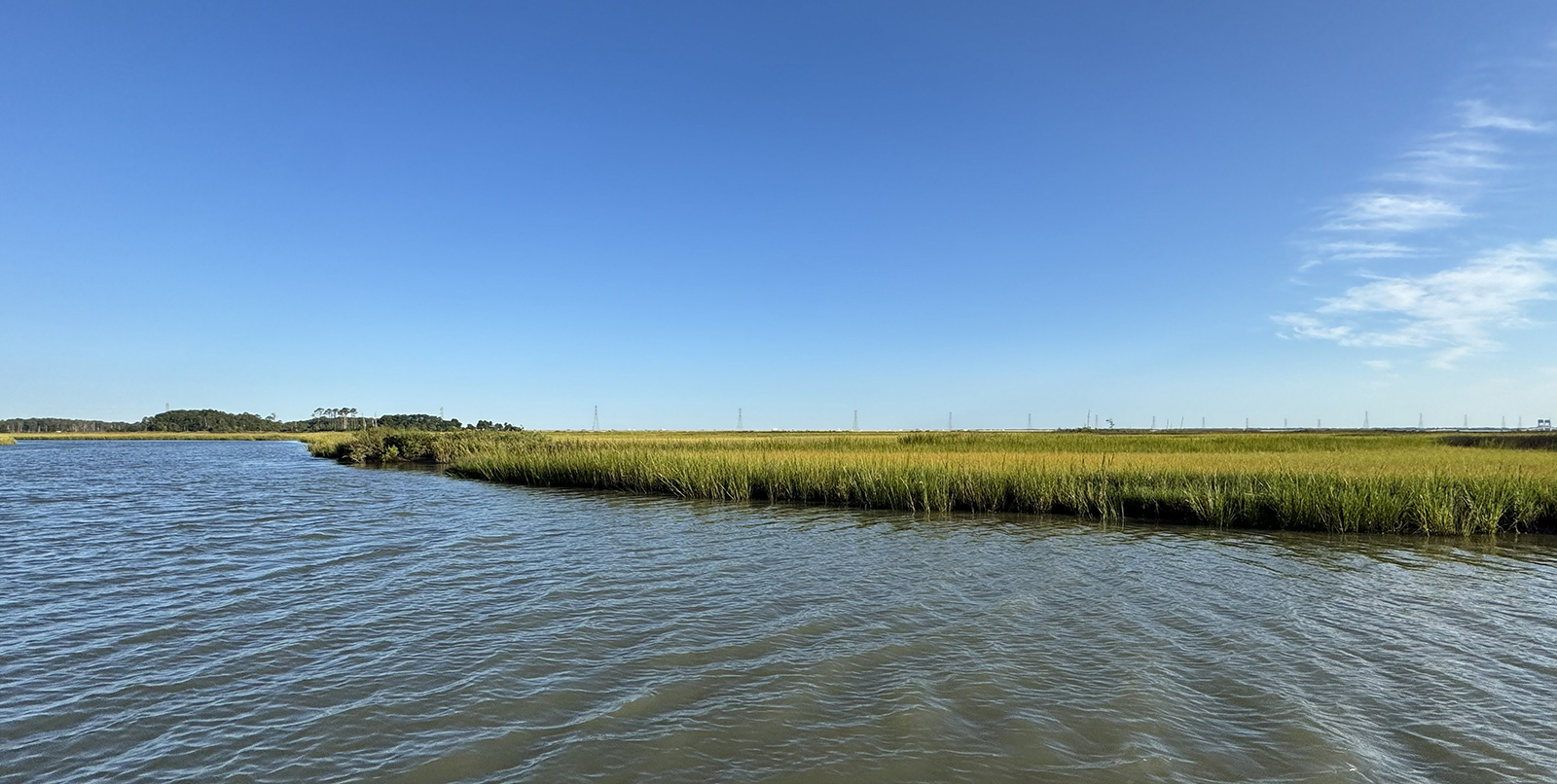
Ragged Island WMA. Alex McCrickard/DWR Photo
Ragged Island Wildlife Management Area provides a super scenic backdrop directly across from Newport News. Oyster beds and tidal salt marsh abound here, and the creeks that weave and wind though the WMA carry impressive tidal current. Low tide looks drastically different than high tide in this area. The WMA can be explored via kayak or canoe. For anglers fishing from boats, you have a solid 15- to 20-minute run from the Jones Creek Boat Ramp to access the WMA from the water. The other option is to launch at Huntington Park Boat Ramp, which is adjacent to the James River Fishing Pier in Newport News on the north side of the river. The run time is about the same. The river is massive down here, and you absolutely must check the tides and wind forecast when boating and fishing in this area. Dolphins are a common sight in the summer months.
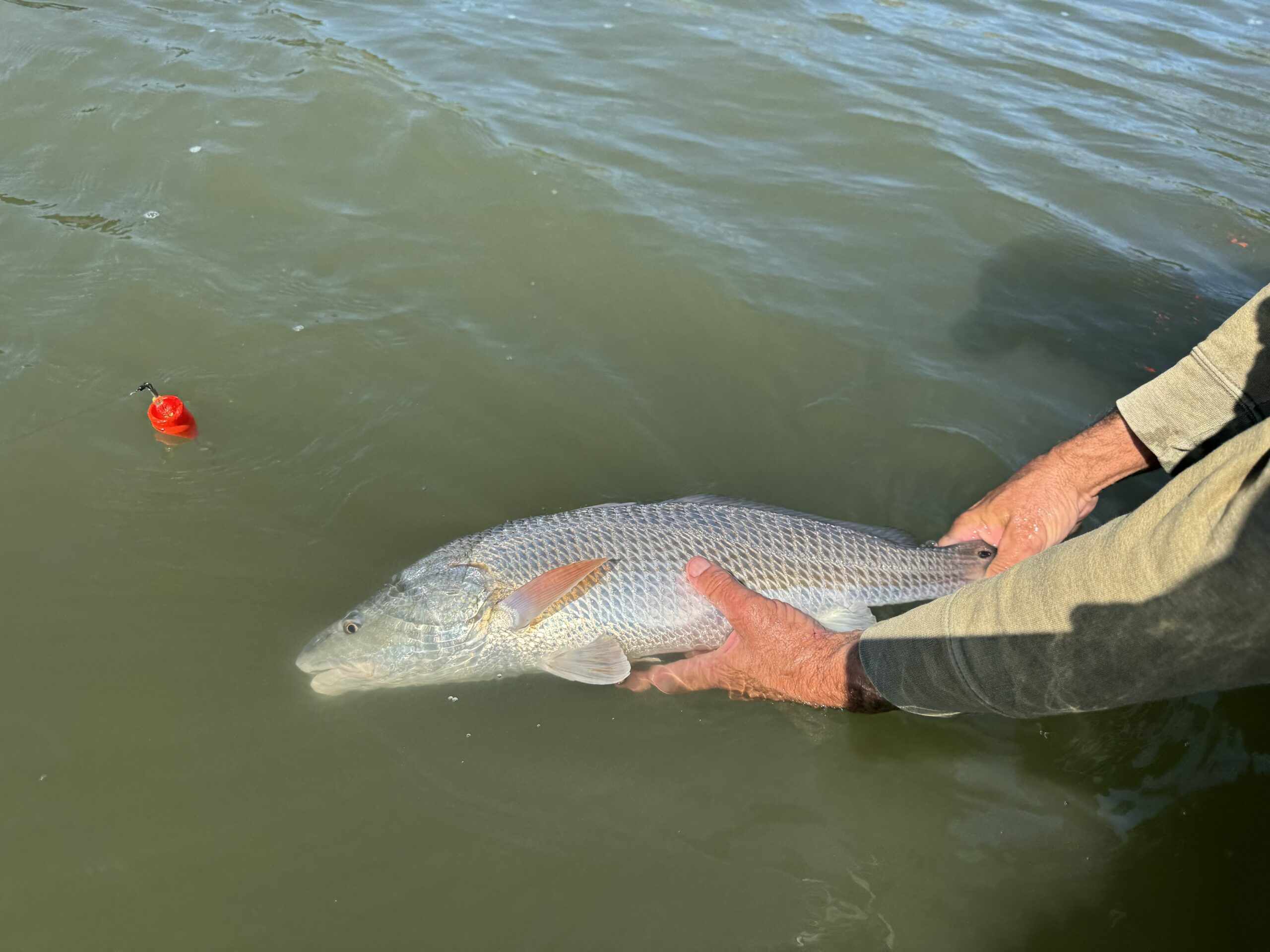
A red drum caught at Ragged Island WMA. Alex McCrickard/DWR Photo
Red drum, speckled trout, striped bass, bluefish, flounder, and sheepshead are common catches in this area during the summer months. During wet periods, blue catfish are caught in this area and even off the James River Fishing Pier. Pier anglers have also tangled with some impressive-sized black drum in this area. Downriver from Ragged Island, the James remains very industrial as the river makes its final turn to enter the Chesapeake Bay. The Nansemond and Elizabeth rivers enter from the Norfolk side of the river. Both of these rivers provide excellent fishing opportunities in their own right. The Monitor Merrimac Bridge Tunnel and the Hampton Roads Bridge Tunnel provide popular structure to fish as the river passes through the Hampton area before entering the Bay. This section concludes the final miles as the James meets its destination 348 miles from where it started.
Alex McCrickard is DWR’s Angling Education Coordinator.
Legal Disclaimer:
EIN Presswire provides this news content "as is" without warranty of any kind. We do not accept any responsibility or liability for the accuracy, content, images, videos, licenses, completeness, legality, or reliability of the information contained in this article. If you have any complaints or copyright issues related to this article, kindly contact the author above.
