

Latest DNREC Artificial Reef Addition Is 180-Foot Retired Oil Field Supply Ship Turned Commercial Fishing Vessel
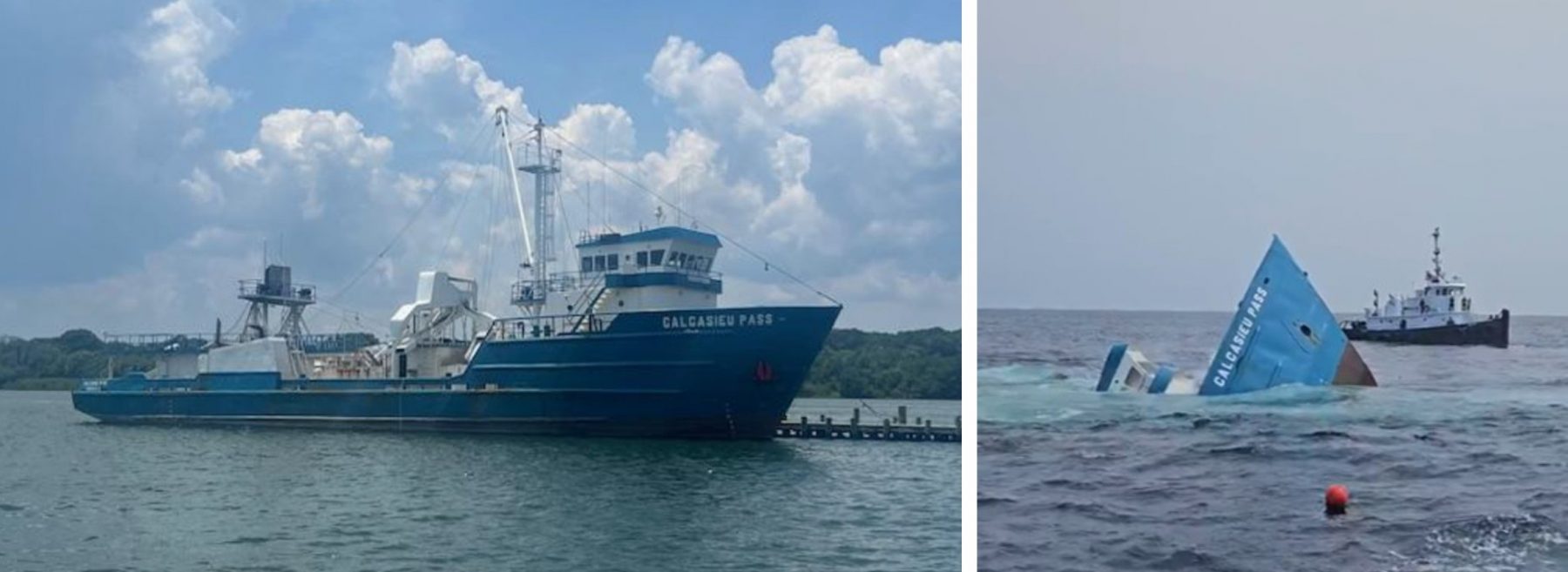
Calcasieu Pass sailing with the Atlantic menhaden fleet and, right, when DNREC reefed the ship /Delaware DNREC photos
Calcasieu Pass Sunk on Del-Jersey-Land Reef to Create More Marine Habitat, Angling and Dive Opportunities
The Department of Natural Resources and Environmental Control has once again expanded Delaware’s renowned artificial reef system, creating more marine habitat by sinking the Calcasieu Pass, an offshore oilfield supply vessel turned menhaden processing ship, onto Reef Site 13 following environmental remediation and approval. Also known as the Del-Jersey-Land Reef, the site is the centerpiece of the reef system – with its offshore location equidistant from ports in the three states that make up its name.
The Calcasieu Pass, 180 feet long with a 40-foot beam, will provide valuable habitat for aquatic life, along with angling and diving opportunities for outdoor recreationalists. Originally built in 1982 as an offshore supply vessel, later joining the East Coast menhaden fleet, the ship’s final repurposing is expected to buoy both economic and environmental opportunity for Delaware.
“The addition of this vessel to our reef system continues DNREC’s commitment to improving marine habitat while giving retired maritime vessels a new purpose beneath the waves,” said DNREC Secretary Greg Patterson. “The artificial reef system is a driver for Delaware’s coastal and conservation economies, and carries out the Department’s mission of conserving and sustaining our natural resources.”
The new reef addition’s name reflects its original commissioning – Calcasieu Pass is a bend of the Calcasieu Ship Channel, at the mouth of the Gulf of Mexico, near Lake Charles, La. – an area that specializes in liquified natural gas production. The ship supported offshore oilfield operations until 1989, when it was converted into an Atlantic menhaden fishing vessel. Calcasieu Pass then sailed for more than 30 years from Reedville, Va. in the Atlantic menhaden reduction industry, processing the species for the many commercial products that menhaden is an ingredient in, from fish oil to pet food to lipstick and cosmetics.
On the Del-Jersey-Land Reef, Calcasieu Pass will provide complex underwater habitat that attracts a variety of reef-associated fish and invertebrates. Over time, marine organisms such as mussels, barnacles, and corals will colonize the structure, creating a thriving ecosystem from the bottom up that supports both marine life and recreational fishing and deep-water diving opportunities.
The Calcasieu Pass sinking was carried out by Norfolk, Va.-based marine contractor Coleen Marine, which has handled numerous reef deployments over the DNREC artificial reef program’s existence at many of Delaware’s 14 permitted artificial reef sites.
As with all ships and other reefed vessels that DNREC sends down, Calcasieu Pass was sunk only after receiving approvals from the U.S. Environmental Protection Agency and U.S. Coast Guard for environmental cleanliness and safety. Before a vessel is turned into an artificial reef, it undergoes extensive preparation in accordance with all applicable federal and state environmental standards to ensure it is suitable for use.
To buy and reef Calcasieu Pass, the DNREC Division of Fish and Wildlife, which oversees the reef program, invested $285,000 in federal Sport Fish Restoration funds.
For more information about the DNREC Artificial Reef Program, visit the de.gov/artificialreefs webpage.
About DNREC
The Delaware Department of Natural Resources and Environmental Control protects and manages the state’s natural resources, protects public health, provides outdoor recreational opportunities, and educates Delawareans about the environment. The DNREC Division of Fish and Wildlife conserves and manages Delaware’s fish and wildlife and their habitats, and provides fishing, hunting, wildlife viewing and boating access on more than 75,000 acres of public land owned or managed by the Division of Fish and Wildlife. For more information, visit the website and connect with @DelawareDNREC on YouTube, Facebook, Instagram, X or LinkedIn.
Media Contact: Michael Globetti, michael.globetti@delaware.gov
###
Legal Disclaimer:
EIN Presswire provides this news content "as is" without warranty of any kind. We do not accept any responsibility or liability for the accuracy, content, images, videos, licenses, completeness, legality, or reliability of the information contained in this article. If you have any complaints or copyright issues related to this article, kindly contact the author above.
